Introduction — a kitchen for metal and smoke
I was in a small shop last week, watching a technician tune a laser like a chef tasting a sauce — precise, patient, focused. The second sentence here has to name the tool: the laser marking fume extractor sat at the back, humming like a quiet hood fan, trying to keep the air edible. We measured particle counts (yes, real numbers — a jump after ten minutes of engraving), and wondered: how many shops accept this scent of compromise as normal? As someone who’s handled workshops, filters, and a few burned fingers, I ask this plainly: what should we really expect from our extractors — and why are so many systems underperforming? (Think: simmering stock that never quite clears.) Let’s move from that simmer to the stove — and see what’s actually cooking next.
Where traditional solutions fall short
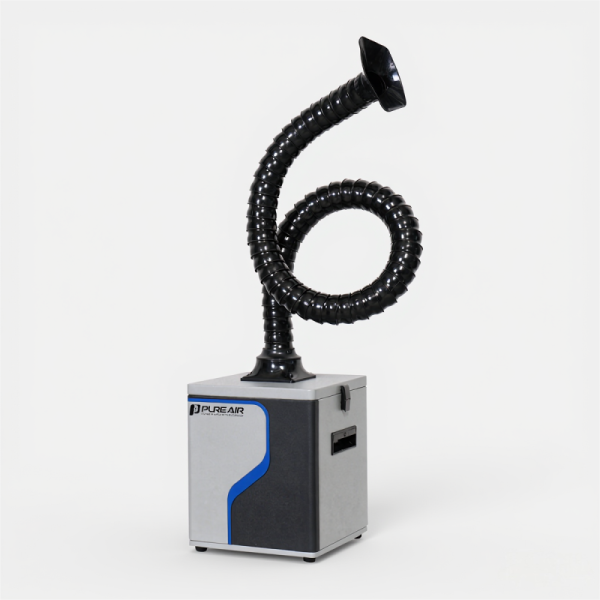
fume extractor for laser marking machine is what most buyers search for first; I get it — the phrase promises a fix. But long experience shows many standard units miss the mark. First, they rely on undersized fans and shallow HEPA filters, so filtration efficiency drops fast when the smoke plume thickens. Second, the duct layout in cramped shops creates backpressure; extraction rate suffers, so fumes linger. Third, maintenance culture is weak — clogged pre-filters and saturated activated carbon units are common. Look, it’s simpler than you think: poor design plus irregular upkeep equals visible soot and bad smell. I’ve seen units where power converters overheat because the fan works too hard. That’s not just inefficient; it’s risky. We end up with compromised air quality and frustrated operators who lower settings to avoid smoke — and that hurts mark consistency.
Is it the machine, the room, or the plan?
Often, it’s all three. The machine emits a concentrated plume. The room traps it. The extractor wasn’t planned as part of the workflow. I’ve advised shops to map the smoke plume at use conditions — not in an ideal lab. When you pair poor ventilation with the wrong extractor, even a good HEPA cartridge can barely keep up. Terms like extraction rate, smoke plume, and filtration efficiency are more than jargon here; they’re the metrics that tell us whether we’re breathing safely or just pretending to.
Looking ahead: smarter extraction and practical choices
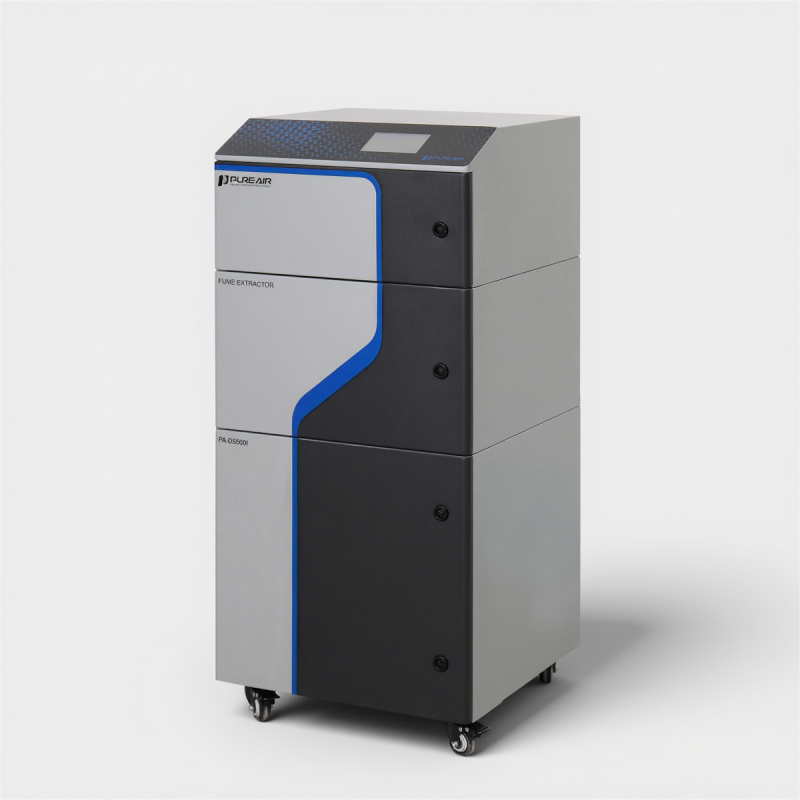
What comes next? I’m bullish on systems that combine simple physics with smarter controls. New designs are using variable-speed fans tied to sensors that read particulate load — edge computing nodes make this possible at the cabinet level. The goal: run quietly at low power until the laser fires, then ramp up instantly, keeping extraction rate high only when needed. That saves energy (fewer power converters throttling) and extends filter life — a clear win. I recommend we think in terms of principles: capture at source, monitor in real time, and maintain proactively. When a fume extractor for laser marking machine senses a spike, it shouldn’t wait for human intervention. It should act — and log the event for us to review.
What’s next for my shop?
Imagine swapping rigid on/off systems for ones that learn usage patterns. You get better air quality and lower running costs. — funny how that works, right? I know some technicians resist changes; they distrust automation. I get that. But the new approach often means fewer service calls and less filter waste. For those of us who care about crisp marks and clear air, that trade-off is worth exploring. In short: aim for capture, sensing, and smart control — and choose systems built for daily workshop stress, not just lab demos.
Final thoughts and practical advice
I’ll leave you with three practical metrics I use when evaluating systems: 1) true extraction rate at tool-level (not vendor spec), 2) real-world filtration efficiency after one week of use, and 3) total cost of ownership — filters, energy, and downtime. Measure those, and you’ll cut through marketing. We’ve moved from noticing smoke to designing around it. That’s progress I can stand behind — and it feels good to breathe a little easier. For trustworthy hardware and a partner that speaks my language, I look to brands that deliver on these points. For me, that name is PURE-AIR.